 153 Tunes |
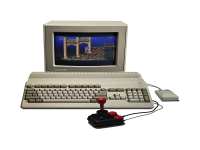
amiga Amiga is a family of personal computers introduced by Commodore in 1985. The original model is one of a number of mid-1980s computers with 16- or 16/32-bit processors, 256 KB or more of RAM, mouse-based GUIs, and significantly improved graphics and audio compared to previous 8-bit systems. These systems include the Atari ST—released earlier the same year—as well as the Macintosh and Acorn Archimedes. Based on the Motorola 68000 microprocessor, the Amiga differs from its contemporaries through the inclusion of custom hardware to accelerate graphics and sound, including sprites and a blitter, and a pre-emptive multitasking operating system called AmigaOS. |
 153 Tunes |
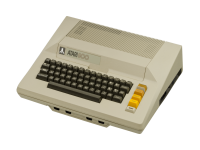
atari-computer The Atari 8-bit computers, formally launched as the Atari Home Computer System,[2] are a series of 8-bit home computers introduced by Atari, Inc. in 1979 with the Atari 400 and Atari 800.[3] It is the first home computer architecture with coprocessors, enabling more advanced graphics and sound than most of its contemporaries. Video games are key to its software library, and the 1980 first-person space combat simulator Star Raiders is considered the platform's killer app. |
 153 Tunes |
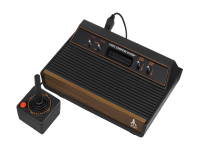
atari-2600 The Atari 2600 is a home video game console developed and produced by Atari, Inc. Released in September 1977 as the Atari Video Computer System (Atari VCS), it popularized microprocessor-based hardware and games stored on swappable ROM cartridges, a format first used with the Fairchild Channel F in 1976. The VCS was bundled with two joystick controllers, a conjoined pair of paddle controllers, and a game cartridge—initially Combat[3] and later Pac-Man.[4] Sears sold the system as the Tele-Games Video Arcade. Atari rebranded the VCS as the Atari 2600 in November 1982 alongside the release of the Atari 5200. |
 153 Tunes |
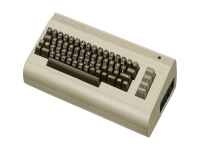
commodore-64 The Commodore 64, also known as the C64, is an 8-bit home computer introduced in January 1982 by Commodore International (first shown at the Consumer Electronics Show, January 7–10, 1982, in Las Vegas).[4] It has been listed in the Guinness World Records as the highest-selling single computer model of all time,[5] with independent estimates placing the number sold between 12.5 and 17 million units.[2] Volume production started in early 1982, marketing in August for US$595 (equivalent to $1,880 in 2023).[6] Preceded by the VIC-20 and Commodore PET, the C64 took its name from its 64 kilobytes (65,536 bytes) of RAM. With support for multicolor sprites and a custom chip for waveform generation, the C64 could create superior visuals and audio compared to systems without such custom hardware. |
 153 Tunes |
microsoft-ms-dos MS-DOS is an operating system for x86-based personal computers mostly developed by Microsoft. Collectively, MS-DOS, its rebranding as IBM PC DOS, and a few operating systems attempting to be compatible with MS-DOS, are sometimes referred to as "DOS" (which is also the generic acronym for disk operating system). MS-DOS was the main operating system for IBM PC compatibles during the 1980s, from which point it was gradually superseded by operating systems offering a graphical user interface (GUI), in various generations of the graphical Microsoft Windows operating system. |
 153 Tunes |
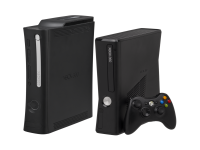
microsoft-xbox-360 The Xbox 360 is a home video game console developed by Microsoft. As the successor to the original Xbox, it is the second console in the Xbox series. It competed with Sony's PlayStation 3 and Nintendo's Wii as part of the seventh generation of video game consoles. It was officially unveiled on MTV on May 12, 2005, with detailed launch and game information announced later that month at the 2005 Electronic Entertainment Expo (E3). |
 153 Tunes |
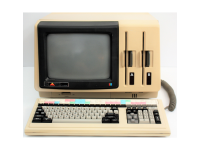
nec The Nec commonly shortened to PC-98 or 98 is a lineup of Japanese 16-bit and 32-bit personal computers manufactured by NEC from 1982 to 2000. The platform established NEC's dominance in the Japanese personal computer market, and, by 1999, more than 18 million units had been sold.[4] While NEC did not market these specific machines in the West, it sold the NEC APC series, which had similar hardware to early PC-98 models. |
 153 Tunes |
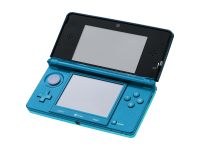
nintendo-3ds The Nintendo 3DS[a] is a foldable handheld game console produced by Nintendo. The console was announced in March 2010 and unveiled at E3 2010 as the successor to the Nintendo DS. The system features backward compatibility with Nintendo DS video games.[8] As an eighth-generation console, its primary competitor was Sony's PlayStation Vita. |
 153 Tunes |
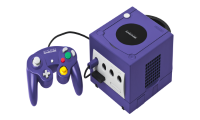
nintendo-gamecube The GameCube[h][i] is a home video game console developed and marketed by Nintendo. It was released in Japan on September 14, 2001, in North America on November 18, 2001, in Europe on May 3, 2002, and in Australia on May 17, 2002. It is the successor to the Nintendo 64 (N64) and the predecessor to the Wii. As a sixth-generation console, the GameCube primarily competed with the PlayStation 2 and Xbox. |
 153 Tunes |
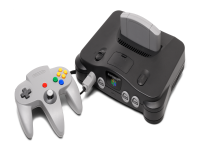
nintendo-n64 The Nintendo 64[a] (N64) is a home video game console developed by Nintendo. It was released on June 23, 1996, in Japan; on September 29, 1996, in North America; and on March 1, 1997, in Europe and Australia. The successor to the Super Nintendo Entertainment System, it was the last major home console to use cartridges as its primary storage format until the Nintendo Switch in 2017.[9] As a fifth-generation console, the Nintendo 64 primarily competed with the Sony PlayStation and the Sega Saturn. |
 153 Tunes |
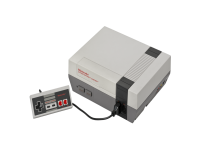
nintendo-nes The Nintendo Entertainment System (NES) is an 8-bit third-generation home video game console produced by Nintendo. It was first released in Japan in 1983 as the Family Computer (FC),[note 1] commonly referred to as Famicom.[note 2] It was redesigned to become the NES, which was released in American test markets on October 18, 1985, and was soon fully launched in North America and other regions. |
 153 Tunes |
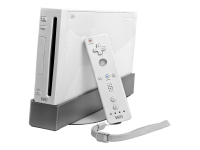
nintendo-wii The Wii is a home video game console developed and marketed by Nintendo. It was released on November 19, 2006 in North America, and in December 2006 for most other regions of the world. It is Nintendo's fifth major home game console, following the GameCube and is a seventh-generation console alongside Microsoft's Xbox 360 and Sony's PlayStation 3. |
 153 Tunes |
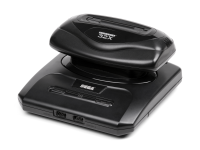
sega-32x The 32X is an add-on for the Sega Genesis video game console. Codenamed "Project Mars", it was designed to expand the power of the Genesis and serve as a transitional console into the 32-bit era until the release of the Sega Saturn. The 32X uses its own ROM cartridges and has its own library of games. It was distributed under the name Super 32X[a] in Japan and South Korea, Genesis 32X in North America, Mega 32X in Brazil, and Mega Drive 32X in all other regions. |
 153 Tunes |
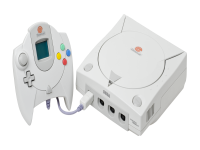
sega-dreamcast The Dreamcast[a] is a home video game console released by Sega on November 27, 1998, in Japan; September 9, 1999, in North America; and October 14, 1999, in Europe. It was the first sixth-generation video game console, preceding Sony's PlayStation 2, Nintendo's GameCube, and Microsoft's Xbox. The Dreamcast was discontinued in 2001, ending Sega's 18 years in the console market. |
 153 Tunes |
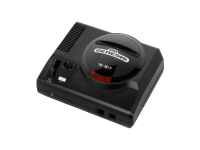
sega-genesis The Sega Genesis, also known as the Mega Drive[b] outside North America, is a 16-bit fourth generation home video game console developed and sold by Sega. It was Sega's third console and the successor to the Master System. Sega released it in 1988 in Japan as the Mega Drive, and in 1989 in North America as the Genesis. In 1990, it was distributed as the Mega Drive by Virgin Mastertronic in Europe, Ozisoft in Australasia, and Tectoy in Brazil. In South Korea, it was distributed by Samsung Electronics as the Super Gam*Boy and later the Super Aladdin Boy. |
 153 Tunes |
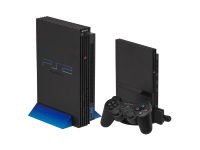
sony-ps2 The PlayStation 2 (PS2) is a home video game console developed and marketed by Sony Computer Entertainment. It was first released in Japan on 4 March 2000, in North America on 26 October 2000, in Europe on 24 November 2000, and in Australia on 30 November 2000. It is the successor to the PlayStation (console), as well as the second installment in the PlayStation brand of consoles. As a sixth-generation console, it competed with Nintendo's GameCube, Sega's Dreamcast, and Microsoft's Xbox. It is the best-selling video game console of all time, having sold over 155 million units worldwide, nearly triple the combined sales of the Dreamcast, GameCube, and Xbox. |
 153 Tunes |
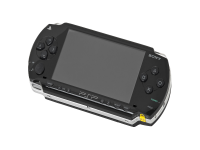
sony-psp The PlayStation Portable[a] (PSP) is a handheld game console developed and marketed by Sony Computer Entertainment. It was first released in Japan on December 12, 2004, in North America on March 24, 2005, and in PAL regions on September 1, 2005, and is the first handheld installment in the PlayStation line of consoles. As a seventh generation console, the PSP competed with the Nintendo DS. |
 153 Tunes |
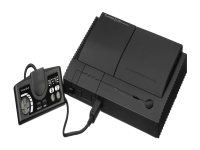
turbo-duo The TurboDuo is a fourth-generation video game console developed by NEC Home Electronics and Hudson Soft for the North American market. The TurboDuo was test-marketed in Los Angeles in October 1992, before a nationwide rollout in May 1993.[2] It is the North American version of the Japanese PC Engine Duo game console which was released in September 1991. |
 153 Tunes |
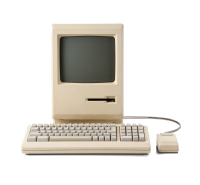
Apple The Apple Computer 1 (Apple-1[a]), later known predominantly as the Apple I (written with a Roman numeral),[b] is an 8-bit motherboard-only personal computer designed by Steve Wozniak[5][6] and released by the Apple Computer Company (now Apple Inc.) in 1976. The company was initially formed to sell the Apple I its first product and would later become the world's largest technology company.[7] The idea of starting a company and selling the computer came from Wozniak's friend and Apple co-founder Steve Jobs.[8][9] One of the main innovations of the Apple I was that it included video display terminal circuitry and a keyboard interface on a single board, allowing it to connect to a low-cost composite video monitor instead of an expensive computer terminal, compared to most existing computers at the time. Contrary to popular belief, it was not the first personal computer to include such video output, predated by machines such as the Sol-20 and add-in cards such as the VDM-1. |
 153 Tunes |
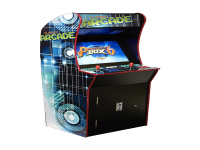
arcade An arcade cabinet, also known as an arcade machine or a coin-op cabinet or coin-op machine, is the housing within which an arcade game's electronic hardware resides. Most cabinets designed since the mid-1980s conform to the Japanese Amusement Machine Manufacturers Association (JAMMA) wiring standard.[1] Some include additional connectors for features not included in the standard. |
 153 Tunes |
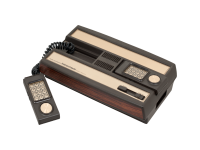
intellivision The Intellivision is a home video game console released by Mattel Electronics in 1979. The name is a portmanteau of "intelligent television". Development began in 1977, the same year as the launch of its main competitor, the Atari 2600.[17] In 1984, Mattel sold its video game assets to a former Mattel Electronics executive and investors, eventually becoming INTV Corporation. Game development ran from 1978 to 1990, when the Intellivision was discontinued. From 1980 to 1983, more than 3.75 million consoles were sold.[12][13][14][15] As per Intellivision Entertainment (the current holders of the Intellivision brand) the final tally through 1990 is somewhere between 4.5 and 5 million consoles sold. |
 153 Tunes |
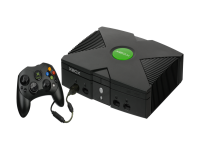
microsoft-xbox The Xbox is a home video game console manufactured by Microsoft that is the first installment in the Xbox series of video game consoles. It was released as Microsoft's first foray into the gaming console market on November 15, 2001, in North America, followed by Australia, Europe and Japan in 2002.[3] It is classified as a sixth-generation console, competing with Sony's PlayStation 2 and Nintendo's GameCube. It was also the first major console produced by an American company since the release of the Atari Jaguar in 1993. |
 153 Tunes |
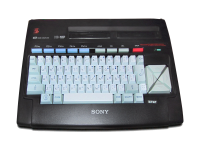
msx MSX is a standardized home computer architecture, announced by ASCII Corporation on June 16, 1983.[1][2] It was initially conceived by Microsoft as a product for the Eastern sector, and jointly marketed by Kazuhiko Nishi, the director at ASCII Corporation.[3] Microsoft and Nishi conceived the project as an attempt to create unified standards among various home computing system manufacturers of the period, in the same fashion as the VHS standard for home video tape machines.[4][5] The first MSX computer sold to the public was a Mitsubishi ML-8000, released on October 21, 1983, thus marking its official release date. |
 153 Tunes |
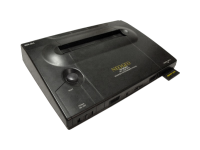
neo-geo The Neo Geo stylized as NEO•GEO and also written as NEOGEO, is a ROM cartridge-based arcade system board and fourth-generation home video game console released on April 26, 1990, by Japanese game company SNK Corporation. It was the first system in SNK's Neo Geo family. |
 153 Tunes |
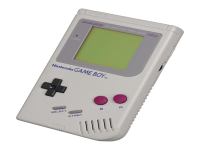
nintendo-gameboy The Game Boy is an 8-bit fourth generation handheld game console developed and manufactured by Nintendo. It was first released in Japan on April 21, 1989, in North America later the same year, and in Europe in late 1990. It was designed by the same team that developed the Game & Watch series of handheld electronic games and several Nintendo Entertainment System (NES) games: Satoru Okada, Gunpei Yokoi, and Nintendo Research & Development 1. |
 153 Tunes |
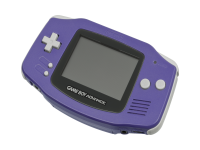
nintendo-gba The Game Boy Advance[a] (GBA) is a 32-bit handheld game console developed, manufactured and marketed by Nintendo as the successor to the Game Boy Color. It was released in Japan on March 21, 2001, in North America on June 11, 2001, in the PAL region on June 22, 2001, and in mainland China as iQue Game Boy Advance on June 8, 2004. |
 153 Tunes |
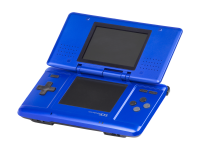
nintendo-nds The Nintendo DS[note 1] is a foldable handheld game console produced by Nintendo, released globally across 2004 and 2005. The DS, an initialism for "Developers' System" or "Dual Screen",[7] introduced distinctive new features to handheld games: two LCD screens working in tandem (the bottom one being a touchscreen), a built-in microphone and support for wireless connectivity.[8] Both screens are encompassed within a clamshell design similar to the Game Boy Advance SP. The Nintendo DS also features the ability for multiple DS consoles to directly interact with each other over Wi-Fi within a short range without the need to connect to an existing wireless network. Alternatively, they could interact online using the now-defunct Nintendo Wi-Fi Connection service. Its main competitor was Sony's PlayStation Portable during the seventh generation of video game consoles. |
 153 Tunes |
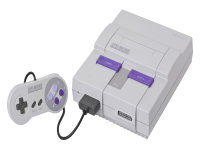
nintendo-snes The Super Nintendo Entertainment System, commonly shortened to Super Nintendo,[b] Super NES or SNES,[c] is a 16-bit home video game console developed by Nintendo that was released in 1990 in Japan and South Korea,[16] 1991 in North America, 1992 in Europe and Oceania and 1993 in South America. In Japan, it is called the Super Famicom (SFC).[d] In South Korea, it is called the Super Comboy[e] and was distributed by Hyundai Electronics.[17] The system was released in Brazil on August 30, 1993,[16][18] by Playtronic. Although each version is essentially the same, several forms of regional lockout prevent cartridges for one version from being used in other versions. |
 153 Tunes |
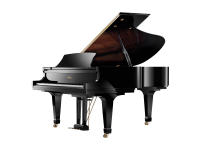
piano The piano is a keyboard instrument that produces sound when its keys are depressed, through engagement of an action whose hammers strike strings. Most pianos have a row of 88 black and white keys, representing each note of the chromatic scale as they repeat throughout the keyboard's span of seven and a quarter octaves. There are 52 white keys, known as “naturals”, and 36 black keys, known as “sharps”. The naturals repeat a pattern of whole steps and half steps unique to any given starting note. These patterns define a diatonic scale. The 36 sharps repeat a pattern of whole steps and minor thirds, which defines a pentatonic scale. |
 153 Tunes |
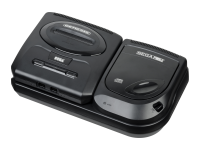
sega-cd The Sega CD, known as Mega-CD[a] in most regions outside North America and Brazil, is a CD-ROM accessory for the Sega Genesis produced by Sega as part of the fourth generation of video game consoles. It was released on December 12, 1991, in Japan, October 15, 1992, in North America, and April 2, 1993, in Europe. The Sega CD plays CD games and adds hardware functionality such as a faster CPU and graphic enhancements such as sprite scaling and rotation. It can also play audio CDs and CD+G discs. |
 153 Tunes |
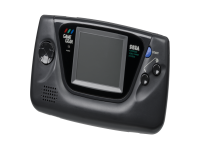
sega-game-gear The Game Gear[a] is an 8-bit fourth generation handheld game console released by Sega on October 6, 1990, in Japan, in April 1991 throughout North America and Europe, and during 1992 in Australia. The Game Gear primarily competed with Nintendo's Game Boy, the Atari Lynx, and NEC's TurboExpress. It shares much of its hardware with the Master System, and can play Master System games through the use of an adapter. Sega positioned the Game Gear, which had a full-color backlit screen with a landscape format, as a technologically superior handheld to the Game Boy. |
 153 Tunes |
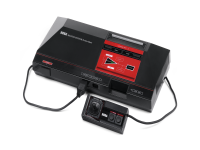
sega-master-system The Master System[c] is an 8-bit third-generation home video game console manufactured and developed by Sega. It was originally a remodeled export version of the Sega Mark III, the third iteration of the SG-1000 series of consoles, which was released in Japan in 1985 with graphical capabilities improved over its predecessors. The Master System launched in North America in 1986, followed by Europe in 1987, and then in Brazil and Korea in 1989. A Japanese version of the Master System was also launched in 1987, which features a few enhancements over the export models (and by proxy the original Mark III): a built-in FM audio chip, a rapid-fire switch, and a dedicated port for the 3D glasses. The Master System II, a cheaper model, was released in 1990 in North America, Australasia and Europe. |
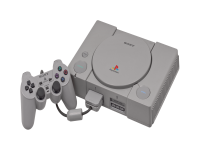 153 Tunes |
sony-ps1 The PlayStation[a] (abbreviated as PS, commonly known as the PS1/PS one or its codename PSX) is a home video game console developed and marketed by Sony Computer Entertainment. It was released in Japan on 3 December 1994, in North America on 9 September 1995, in Europe on 29 September 1995, and in Australia on 15 November 1995. As a fifth-generation console, the PlayStation primarily competed with the Nintendo 64 and the Sega Saturn. |
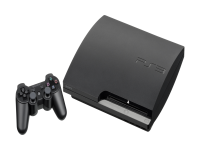 153 Tunes |
sony-ps3 The PlayStation 3 (PS3) is a home video game console developed and marketed by Sony Interactive Entertainment. The successor to the PlayStation 2, it is part of the PlayStation brand of consoles. It was first released on November 11, 2006, in Japan,[12] November 17, 2006, in North America, and March 23, 2007, in Europe and Australia.[13][14][15] The PlayStation 3 competed primarily against Microsoft's Xbox 360 and Nintendo's Wii as part of the seventh generation of video game consoles. |
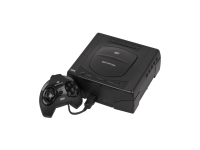 153 Tunes |
sega-saturn The Sega Saturn[a][b] is a home video game console developed by Sega and released on November 22, 1994, in Japan, May 11, 1995, in North America, and July 8, 1995, in Europe. Part of the fifth generation of video game consoles, it is the successor to the successful Genesis. The Saturn has a dual-CPU architecture and eight processors. Its games are in CD-ROM format, including several ports of arcade games and original games. |
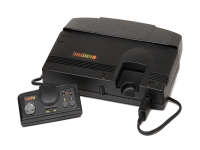 153 Tunes |
turbo-graphics The TurboGrafx-16, known as the PC Engine[a] outside North America, is a home video game console designed by Hudson Soft and sold by NEC Home Electronics. It was the first console marketed in the fourth generation, commonly known as the 16-bit era, though the console has an 8-bit central processing unit (CPU) coupled with a 16-bit graphics processor. It was released in Japan in 1987 and in North America in 1989. In Europe[2] the Japanese model was unofficially imported and distributed in the United Kingdom[3] and France from 1988. In Japan, the system was launched as a competitor to the Famicom, but the delayed United States release meant that it ended up competing with the Sega Genesis and later the Super NES. |